
Point 3 – Neighbourhoods
Building a Community
Building a Community
You’ve reached Point 3 of the Multicultural Trail.
Look beyond the gates and discover how a street could become a community.
In Biertan, neighbourliness meant not just living near somebody, but also fulfilling your duties as a neighbor.
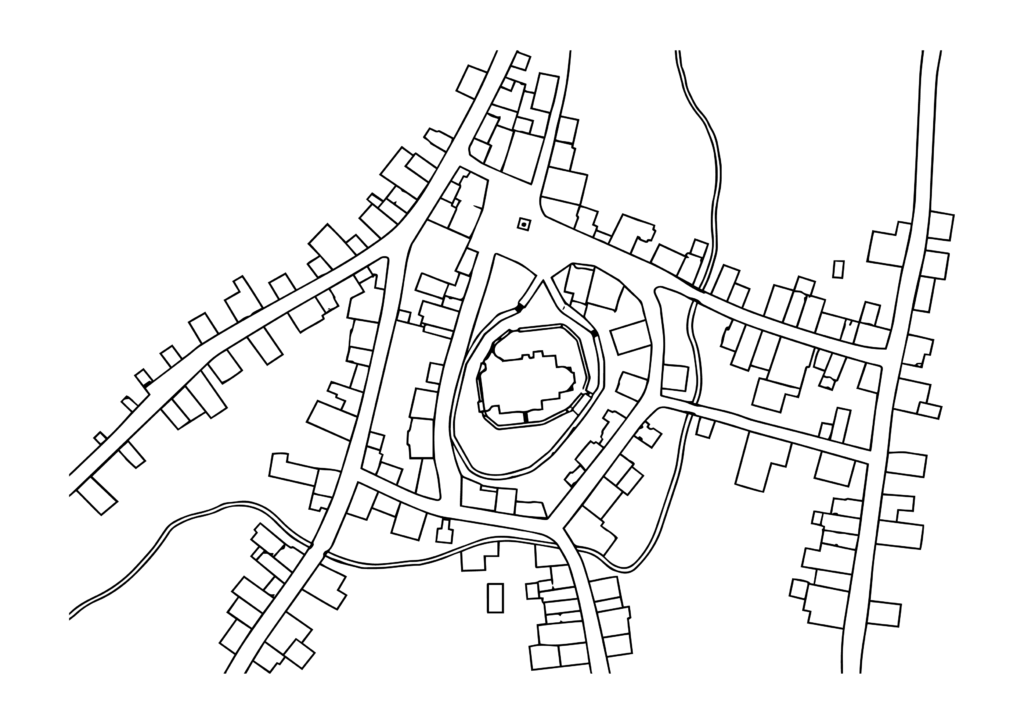
For centuries, the village was organised into what were known as neighbourhoods: groups of households on the same street or in the same area, governed by the same rules, responsibilities and mutual support. Biertan originally had 12 such groups, each with its own statute, which members were expected to abide by.
These rules reached out into almost every part of daily life: maintaining public order, organising the day and night watch, fire safety, street cleaning, maintenance of the access routes and communal work. Neighbourhoods could even step in to mediate disputes between the residents.
Above all, though, they existed to make sure no one had to face any hardships alone.
If someone fell ill, needed help around the household or was going through a difficult time, the others were expected to step in. At funerals, the neighbours took care of the practical arrangements and supported the bereaved family. They also worked together for the church, school and wider community. Participation was not optional, and members who neglected their duties could be fined.
Each neighbourhood had its own leaders and its own shared belongings – tables, benches, dishes, registers and various other objects used during community events. The leader’s home often served as the meeting place for the entire group.
Women had their own part to play. At certain times, a separate group made of women and led by the ‘mother of the neighbourhood’ organised help for sick women or new mothers who needed support.
However, the neighbourhood system did not remain exclusively a Saxon institution.
After the Second World War, Biertan had 11 Saxon neighbourhoods, three Romanian ones, one Roma and one Boyash neighbourhood. The model had been taken up and adapted by the different communities living together in this village.
Perhaps this is what these old neighbourhoods reveal most clearly: community was not just a matter of proximity. It was a model that people worked hard to maintain, based on shared responsibility and mutual help.
Several neighbourhood groups are still active in Biertan today, although they no longer necessarily follow the old street boundaries. People now tend to form groups based on age, friendships and long-standing connections. Contemporary neighbourhoods include people of similar ages, but their main goal has remained the same: mutual support. When times get tough, this takes a practical form: at funerals, for instance, members help the family with the arrangements, logistics and even financial contributions.
While neighbourhoods organised the life of the community, guilds organised the world of labour. Go on to Point 4, where Biertan’s craftsmen take centre stage.
The Biertan Multicultural Trail is part of the project „Equipping and digitalizing the tourist infrastructure of Biertan commune”, a project funded through European funds under the National Recovery and Resilience Plan (PNRR), Component C11 – Tourism and Culture, Reform R1 – Operationalization of Destination Management Organizations (DMO).