
Point 1 – The Heart
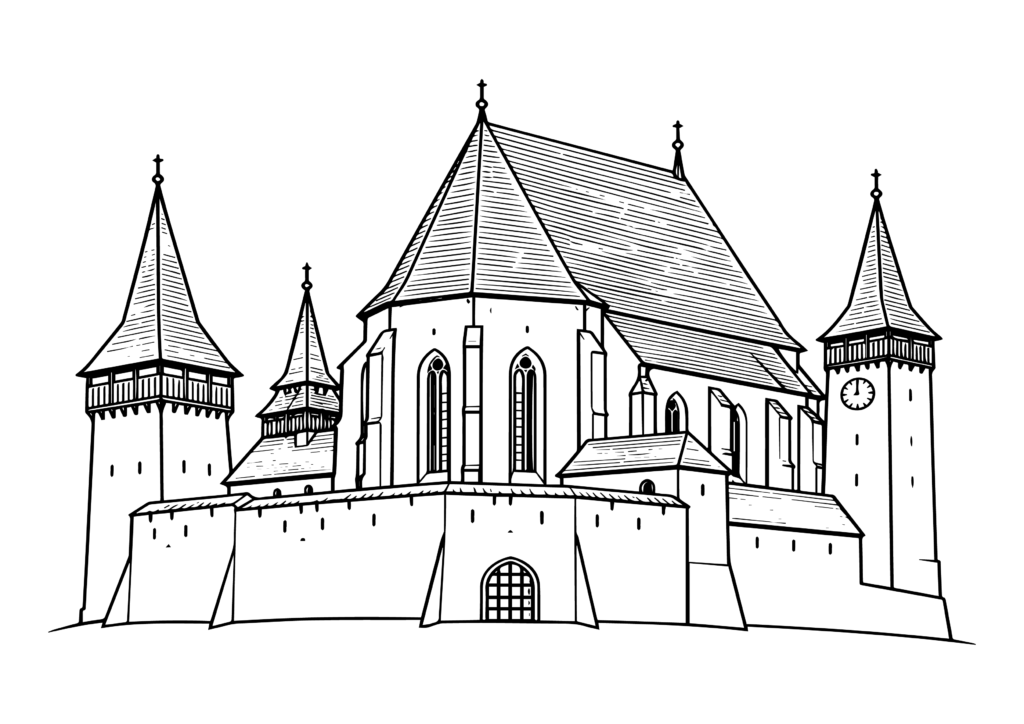
The Heart of Biertan
Welcome to Biertan!
Follow the Multicultural Trail to discover Biertan through the people, places and traditions that have shaped it.
The route has six stops. Each opens a different window onto the village, its people and its past. At the end of each story, we’ll point you towards your next stop.
Let’s start! Right here, in the heart of Biertan.
Take a look around and imagine how this place must have looked five centuries ago.
For centuries, this was the centre of a thriving community, where merchants and craftsmen crossed paths with farmers and winegrowers.
Medieval Biertan began to take shape after German-speaking settlers started arriving in Transylvania in 12th century. They became known as the Transylvanian Saxons, and Biertan was first mentioned in a written document in 1283.
Older records mentioned the village under the name of ”Birthälm”. By 1397, it was described as an oppidum – a market town – and in 1418 it was granted the right to hold a weekly market every Saturday.
Biertan never developed into a town in the modern sense of the word. However, for centuries, it was one of the leading Saxon settlements across southern Transylvania, due to its economic and administrative importance.
From the 14th to the 16th century, Biertan flourished. Craftsmen, farmers and winegrowers all contributed to its prosperity, while the guilds became an important part of the local economic life.
Around 1500, Biertan was one of the most important centres across the region. In 1532, it even had more households than the neighboring town of Mediaș.
But its prosperity also had to be protected. In a time of raids and insecurity, the local community fortified its church, creating the impressive complex that still dominates the village today, and has become Biertan’s best-known landmark.
Biertan’s importance was not only economic. From 1572 to 1867, it was the seat of the superintendent of the Evangelical Church of the Augsburg Confession in Transylvania, turning the village into a major spiritual and administrative centre for the Saxon community.
Yet Biertan’s past is not locked away in the archives or behind its fortress walls. It is still visible in the shape of the village itself: its houses, lanes and gateways; the old neighbourhood associations that once bound people together; the workshops of its craftsmen; and the hills reshaped by generation after generation of winegrowers.
From here, continue your journey to the next stop and take a closer look at Biertan’s traditional houses, as well as the people who lived behind their walls.
The Biertan Multicultural Trail is part of the project „Equipping and digitalizing the tourist infrastructure of Biertan commune”, a project funded through European funds under the National Recovery and Resilience Plan (PNRR), Component C11 – Tourism and Culture, Reform R1 – Operationalization of Destination Management Organizations (DMO).